
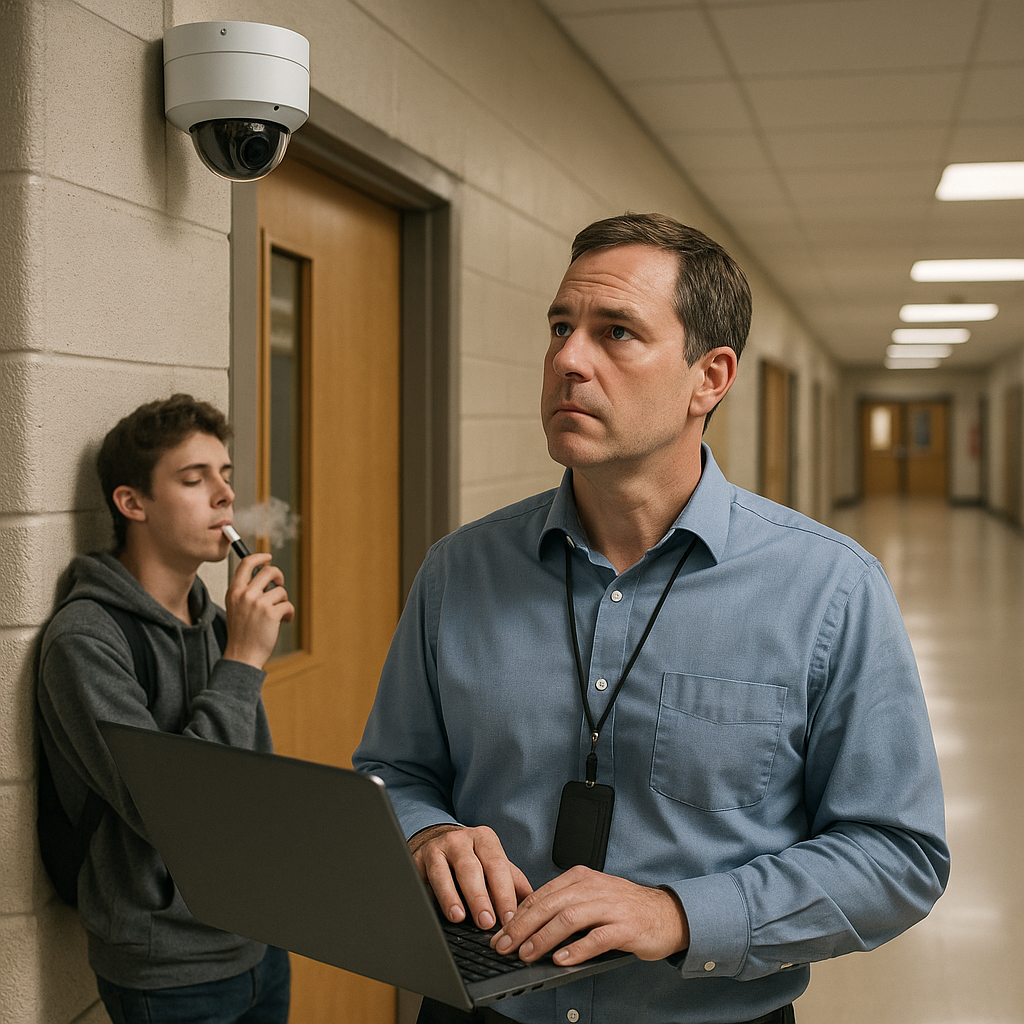
You’re being asked to meet vape-detection mandates—without new capital
Your insurer wants vape detection live this semester. Your board wants a privacy‑sensitive plan. Your budget can’t absorb a camera refresh. Here’s the pragmatic path: use pre‑trained Computer Vision AI on the IP cameras you already own to reach compliance targets in hours, not weeks. That’s the argument our K‑12 team makes every day—start with one camera, validate results, and only then scale by hallway or building. Rip‑and‑replace is a procurement project; meeting a mandate is an operational outcome.
The problem: costs, cycles, and privacy scrutiny
Districts don’t have appetite for multi‑month RFPs, forklifted CCTV, or tools that look like identity systems. Technology directors are being asked to show measurable progress quickly—faster detection in hot spots, notifications to staff, and an audit trail for board and insurer reporting. Budgets favor operating dollars, not capital overhauls. What’s needed is board‑defensible monitoring that focuses on pattern of behavior, not who a student is, and provides exportable evidence when questions come. Procurement teams also look for cooperative contracts to speed decisions; skipping a bespoke bid cycle can be the difference between this semester and next year.
How it works: pre‑trained CV + agentic workflows on your cameras
Nureal’s pre‑trained Computer Vision AI runs on existing IP camera streams to detect and classify vaping events. Agentic AI automates the detect→classify→correlate→notify→audit workflow, reducing manual review and hallway sweeps. Generative AI produces natural‑language incident summaries for administrators, improving clarity in weekly updates. Start with one location: connect a hallway or restroom camera feed, activate the vape‑detection model, set notification rules for the safety radio channel or email/SMS, and enable automatic incident logging for later review. Because the models are ready to deploy on day one, districts move from configuration to validation in hours. This is monitoring for operational awareness, not persistent identification.
Deployment and procurement: start small, scale predictably
You don’t need new hardware. Camera‑agnostic deployment activates on your installed fleet—even mixed vendors—so teams avoid rip‑and‑replace and lengthy network changes. The rollout pattern is simple: start with one camera. Activate one model. See it work in your environment. Capture detections per day, the false‑positive rate, and time‑to‑notification. Expand only where metrics justify it. For purchasing, districts can route through cooperative procurement to compress timelines. Nureal is available on Sourcewell Contract #041525‑NURL, allowing technology and safety teams to move from pilot to districtwide purchase without a long RFP cycle. That gets you to insurer‑recognized monitoring faster, within an operating budget.
Privacy, policy, and reporting your board can defend
Meeting a mandate shouldn’t conflict with student privacy. The system monitors behavior patterns—vape signatures and related context—without persistent identification. Every detection generates an audit entry with time, location, and classification confidence to support administrator action and end‑of‑semester summaries. Generative AI compiles incidents into concise narratives for board packets and insurer documentation. This provides a consistent, repeatable record of activity and response, strengthening your safety plan without turning your camera network into an identity database. For districts documenting policy, reference cooperative purchasing frameworks like Sourcewell to explain why speed and cost control were prioritized alongside privacy protections.
A practical pilot: one middle school hallway
Scope a 2–4 week pilot on a high‑traffic hallway or restroom bank. Define simple success metrics: daily detections observed by staff, qualitative false‑positive notes, and median time from detect to notify. Use Agentic AI to route alerts to your safety lead and auto‑log incidents. Hold a weekly 15‑minute review: confirm locations, tune notification thresholds, and decide whether to expand to adjacent areas. If the data supports it, add cameras and keep the same model. If not, pause and adjust—no sunk cost in new hardware. When procurement is ready, use Sourcewell Contract #041525‑NURL to formalize the rollout on a predictable timeline.
Talk to an expert — Start with one camera. Activate one model. See it work in your environment.