
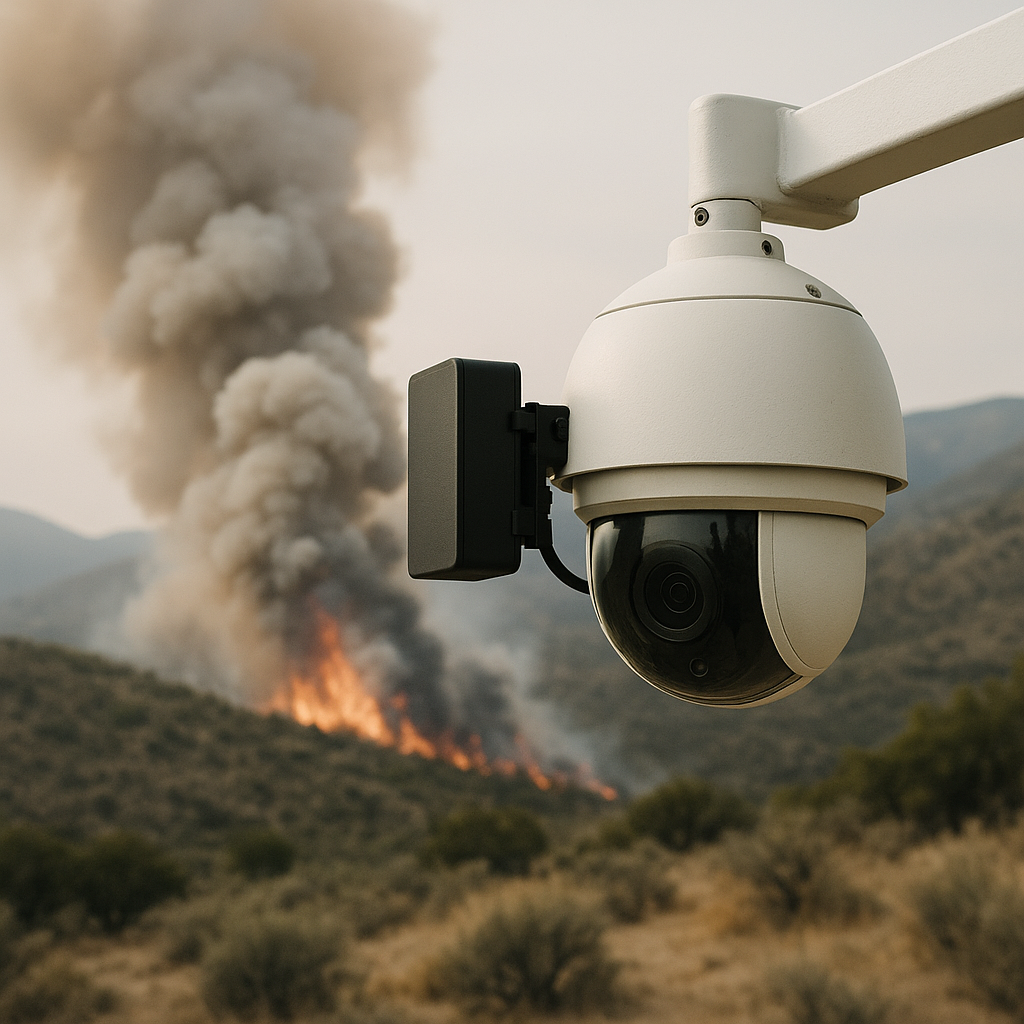
Cut detection-to-dispatch time by activating the cameras you already own
County emergency managers and fire operations chiefs don’t need another long procurement cycle to get earlier wildfire alerts. The fastest way to shave meaningful minutes is to turn existing IP cameras into early‑warning sensors so dispatch sees smoke and flame patterns sooner. States across the Western US are moving this way, applying AI to camera networks to surface actionable signals faster than manual monitoring alone, as covered by the Washington Post’s report on AI wildfire detection pilots (source). The thesis is simple: outcomes first, hardware later. Use case‑ready Computer Vision AI on current feeds, get earlier alerts, then expand.
Why current camera fleets under-deliver on early detection
Most jurisdictions already maintain camera corridors across hills, ridgelines, and WUI perimeters. Yet these feeds often serve as archives rather than operational sensors, creating delays between first smoke and first actionable notification. Operators can’t continuously watch every view, and manual scanning rarely beats fast‑moving ignitions. Those lost minutes affect responder positioning, air resource requests, and evacuation timing. The Washington Post highlights growing interest in AI‑enabled monitoring precisely because current fleets are underutilized. The problem is not lack of coverage—it’s unrealized intelligence sitting in those lenses.
How Computer Vision AI and Agentic AI close the workflow gap
Pre‑trained Computer Vision AI models identify visual patterns of smoke and flame on your existing cameras. When conditions allow, models can also correlate unexpected heat proxies from available metadata. Agentic AI then chains detect→classify→correlate→notify→audit: it confirms a candidate event, attaches frames, routes an alert to dispatch/PSAP systems, and records the sequence for after‑action review. Generative AI adds natural‑language incident summaries and retrieval of prior events to improve operational awareness. Nureal.ai focuses on camera‑agnostic deployment and pre‑trained wildfire modules so you can activate monitoring without retraining, stress‑testing for field reliability and clear operator handoff.
Deployment posture: start small, integrate fast, measure in hours
New sensor fleets can take a season to plan. Retrofitting is different. Start with one camera. Activate one model. See it work in your environment in hours, not weeks. Because the models are pre‑trained and camera‑agnostic, you can pilot on a priority ridgeline, feed alerts into your current dispatch workflow, and evaluate precision/latency before scaling. Nureal.ai integrates with existing incident and notification channels, and provides audit trails for operational review. Public buyers can reduce friction using Sourcewell—Nureal.ai is Available on Sourcewell Contract #041525‑NURL. This approach aligns to the Western states’ trajectory the Post describes: test on live feeds, prove time‑to‑value, then expand where it matters.
Privacy and mission focus: monitor patterns, not people
Wildfire monitoring is about environmental signals, not identity. Models are tuned to detect smoke, flame, and related visual patterns. No persistent identity tracking or facial recognition. This keeps the posture squarely on early detection and responder safety, while supporting public trust. For agencies balancing risk, budgets, and optics, the message is clear: convert existing infrastructure into reliable early‑warning without reframing your program as surveillance. Nureal.ai’s monitoring orientation and agentic workflow help teams move from “we saw it on camera later” to “we acted on an alert sooner.” Talk to an expert. Start with one camera. Activate one model. See it work in your environment.