
Grocery shrink now requires proof, not more video
Regional grocery teams are being asked to cut shrink while protecting margin, labor hours, and capital budgets. That pressure changes the shrink conversation from “find more footage” to “prove which process fixes work.” The FMI blog on the changing shrink story points to a broader shift: shrink is not one problem with one cause. It is a mix of theft, scan errors, spoilage, receiving gaps, and operational inconsistency. For loss prevention and store operations managers, the practical answer is not a fleet-wide camera replacement. It is better use of the cameras already watching high-loss aisles, self-checkout areas, back doors, and stockrooms.
Existing cameras can produce better behavioral signals
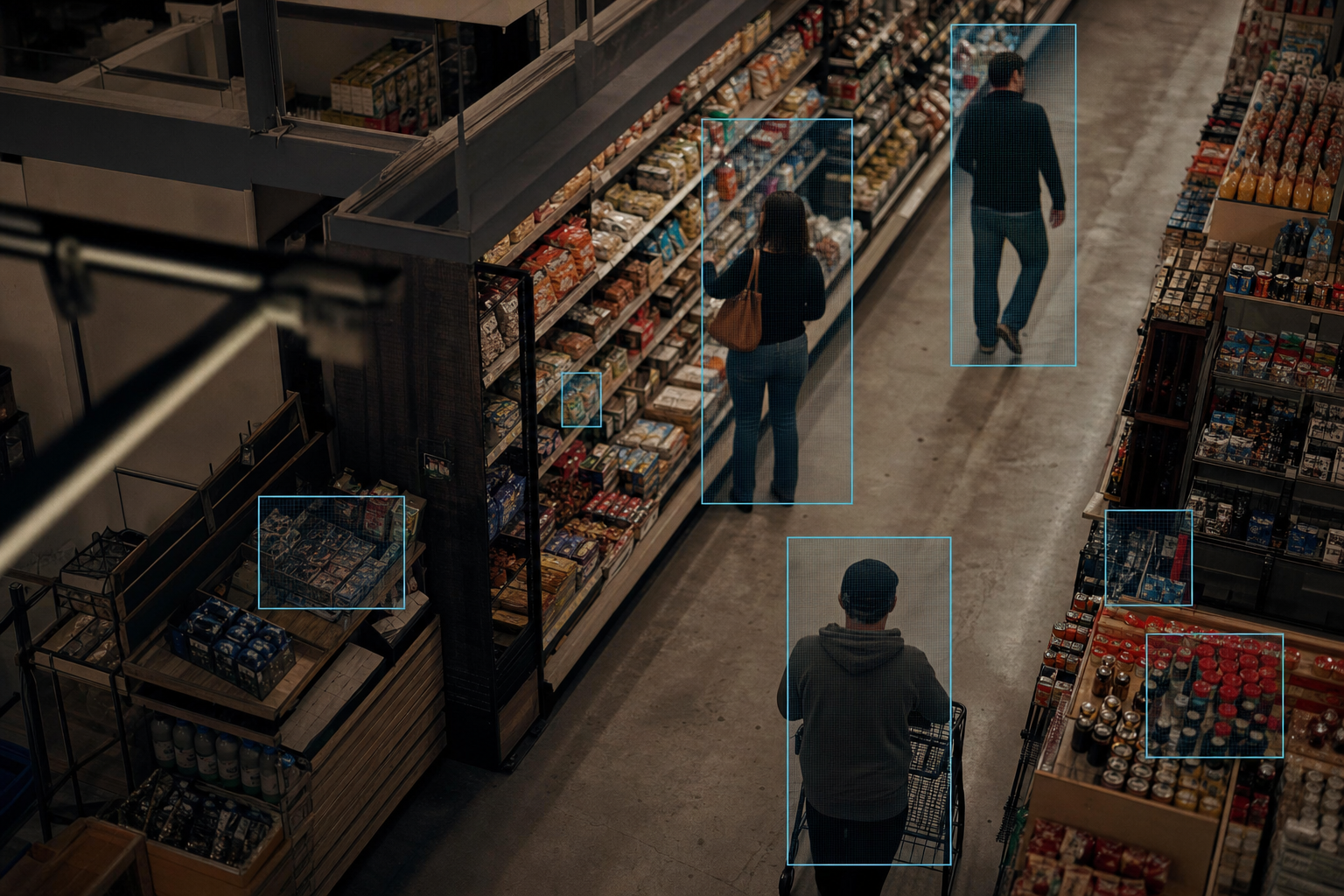
The camera infrastructure inside a regional grocery chain already sees many of the moments that matter. The gap is that teams still rely on manual review after the loss has happened. Computer Vision AI changes that operating model by detecting use-case-specific patterns, such as object removal, suspicious handling patterns, crowding at a service area, or repeated activity near a high-shrink display. nureal.ai works with the cameras you already own, so teams can test monitoring on one store camera without committing to new hardware across the chain. The point is not to watch more. The point is to turn video into a consistent behavioral signal that store teams can compare against process changes.
Aisle-level patterns can guide store-level fixes
Consider a recurring small-theft pattern in a specific grocery aisle, such as repeated product removal from a compact, high-value shelf section near a low-staffed corner of the store. A traditional workflow sends someone to review video after inventory counts show the loss. A monitoring workflow flags repeated behavioral patterns earlier and creates a clearer record for the loss prevention team. That record can support practical fixes: moving the display, changing associate walk paths, adjusting shelf placement, or checking whether restocking gaps correlate with loss. The measurable value comes from fewer review hours, faster incident documentation, and a clearer link between one store process change and the shrink pattern it was meant to reduce.
A pilot should start with one camera and one model
A useful shrink pilot does not need to start with a full-store rollout. Start with one camera aimed at a known loss area. Activate one pre-trained model tied to a specific scenario, such as object removal or suspicious handling patterns. Validate the detections with store leaders and loss prevention, then compare the resulting actions with known shrink indicators in that area. If the model produces useful signals, expand by use case, then by store. This approach keeps the project grounded in ROI. It also gives IT and procurement a cleaner path because nureal.ai is camera- and infrastructure-agnostic, with edge inference that can support faster local detection without a rip-and-replace plan.
From signal to action without extra review burden
Computer Vision AI is strongest when it helps managers act, not when it creates another queue of clips to inspect. In a mature workflow, Agentic AI can route detections into documented actions and case packages, while Generative AI can summarize what happened for reporting. Those pillars support the same operating goal: reduce manual review and make shrink response repeatable. For grocery operators, privacy also matters. Monitoring should focus on behavioral signals and patterns of behavior, not continuous identification. The better shrink playbook pairs process fixes with camera-agnostic intelligence, so each store can test, measure, and scale what works.
Ready to see it in action? Email sales@nureal.ai to schedule a demo.
Sources
https://www.fmi.org/blog/view/fmi-blog/2026/07/22/the-shrink-story-is-changing